
The Tashi Choling Temple
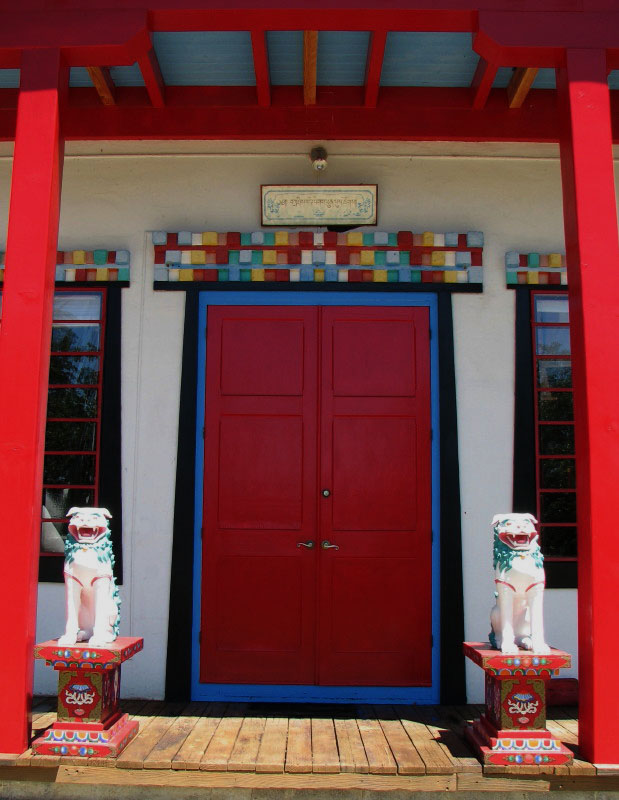
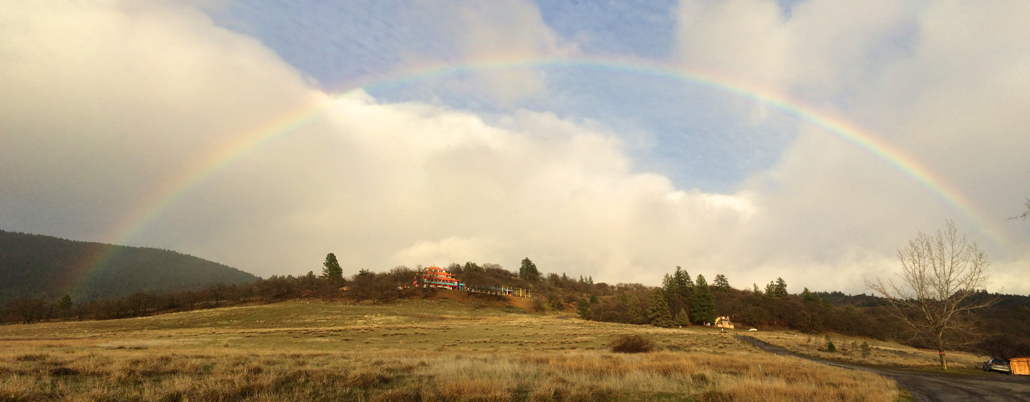
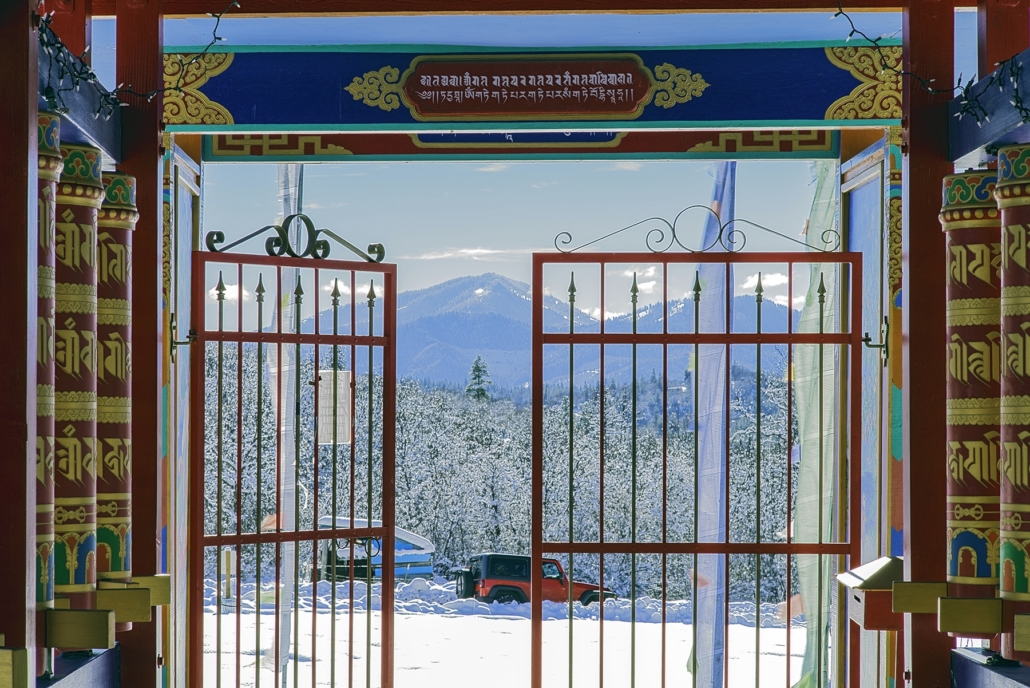
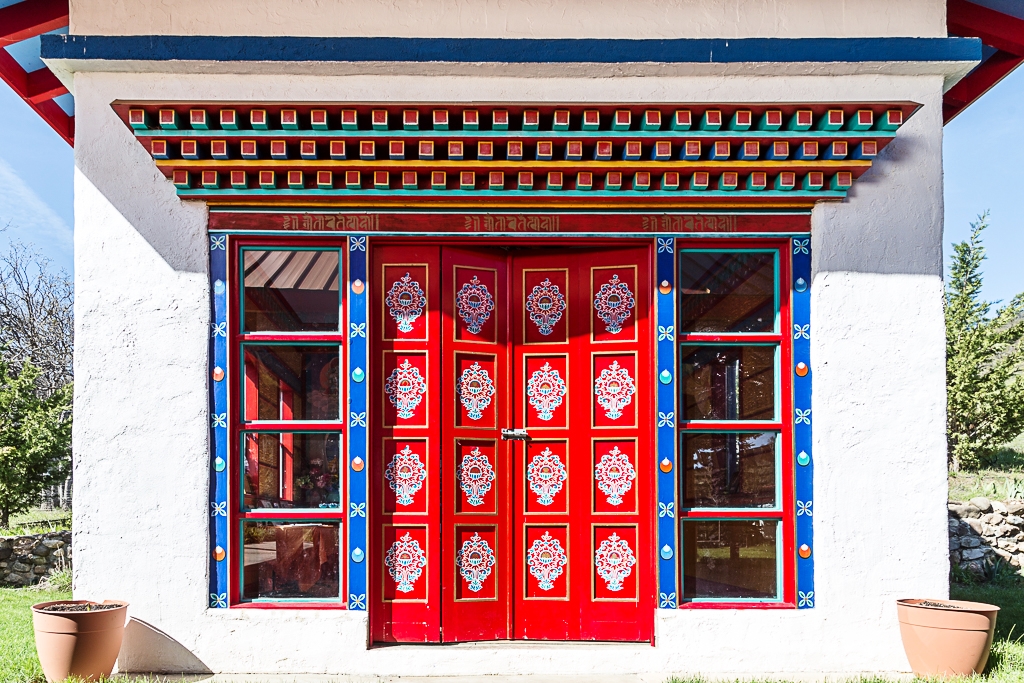
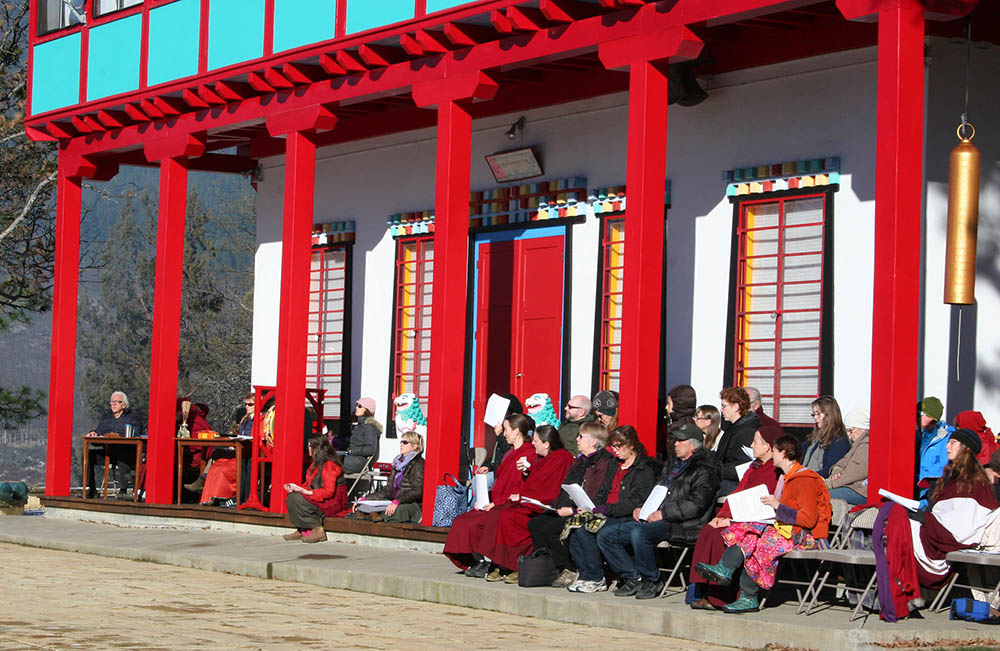 Tashi Chöling’s traditional Tibetan temple faces south on an open hillside, as monasteries are often oriented on the mountains and cliffs of Tibet. The 4-story temple, with its colorful roofs, ornaments, red pillars and fluttering prayer flags, sparkles like a jewel amidst the rugged Siskiyou Mountains.
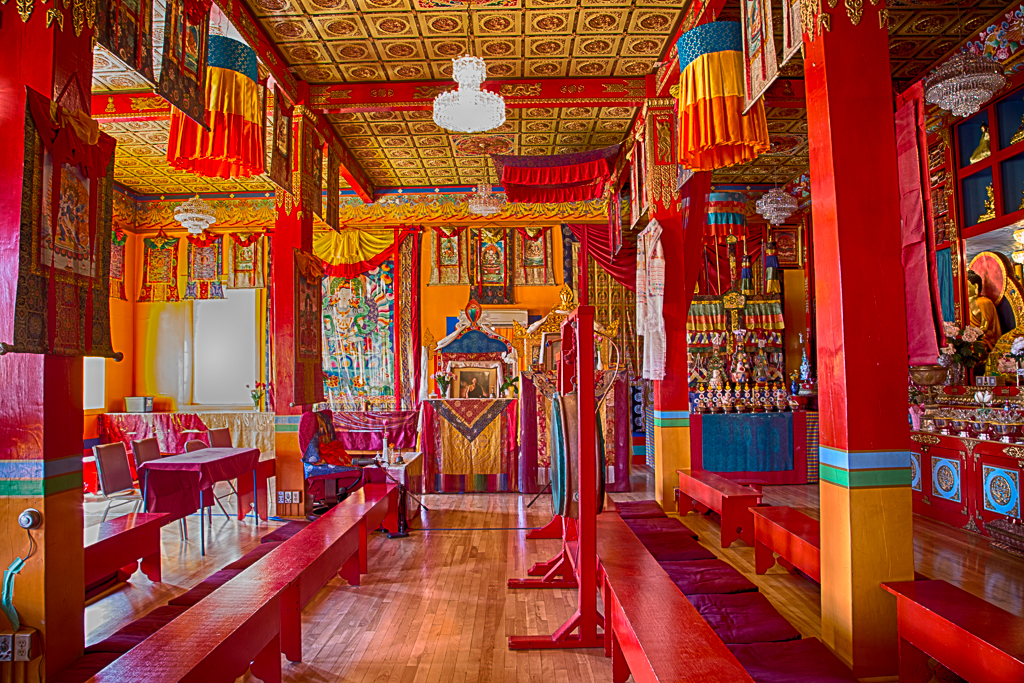
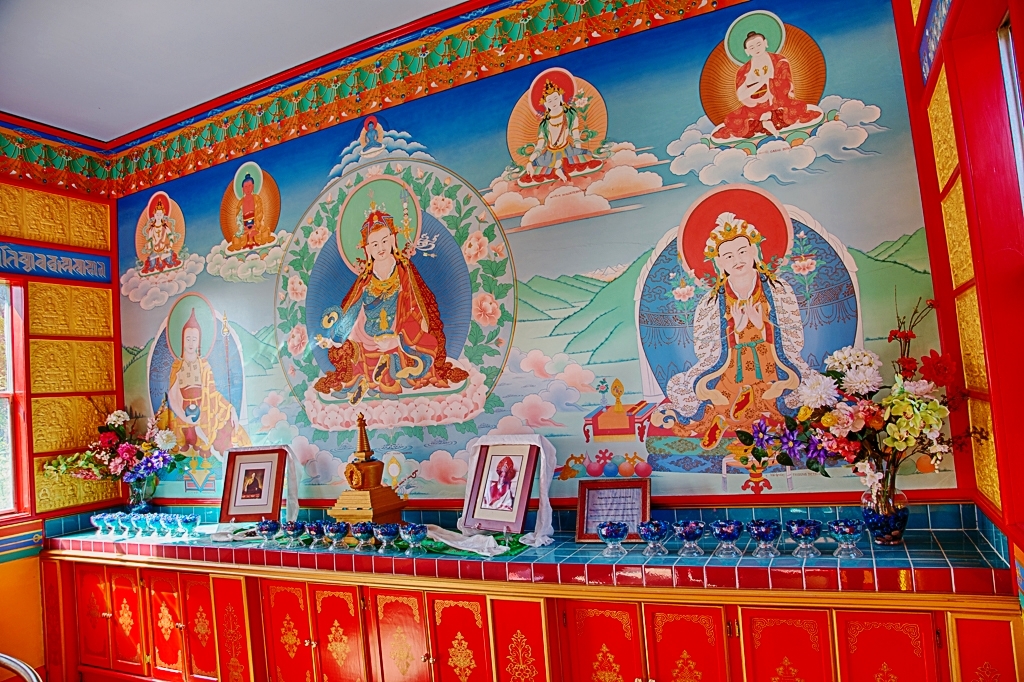
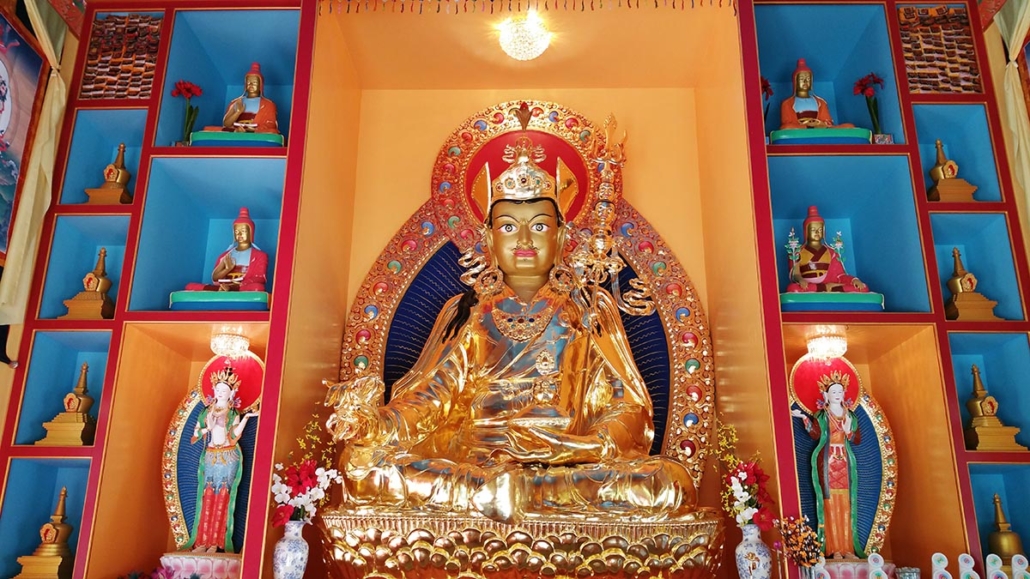
The temple’s interior presents a vivid display of traditional Tibetan sacred art and architecture. A complete scriptural library and eight larger-than-life-sized statues fill the long altar. Thangka paintings depicting the life of the Buddha and other enlightened masters hang on saffron colored walls. This rich contemplative art, along with the butter lamps, incense, flowers, water bowls, and other offerings, combine to create an atmosphere of joyful tranquility within the temple.
The Mandala Garden
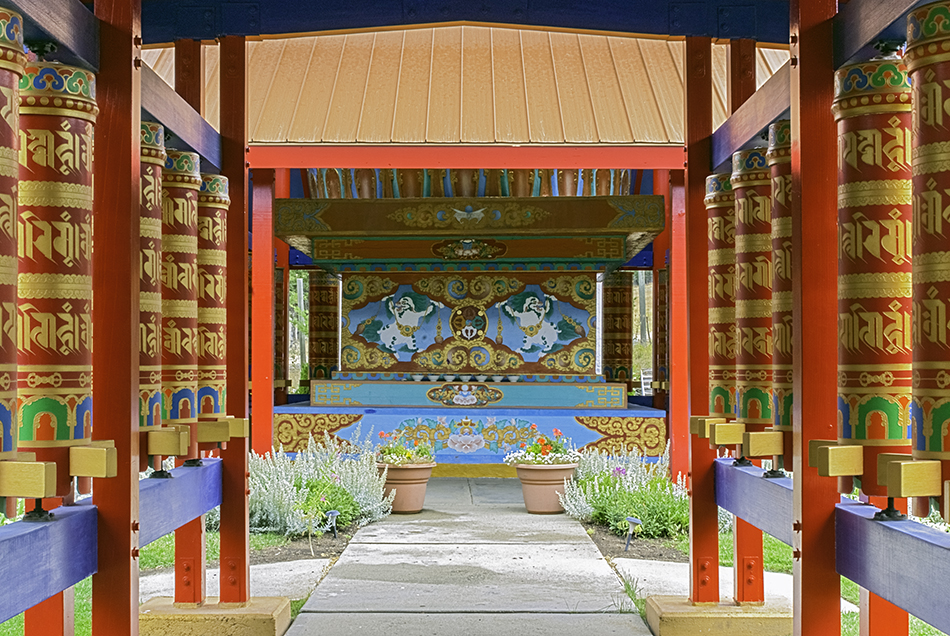
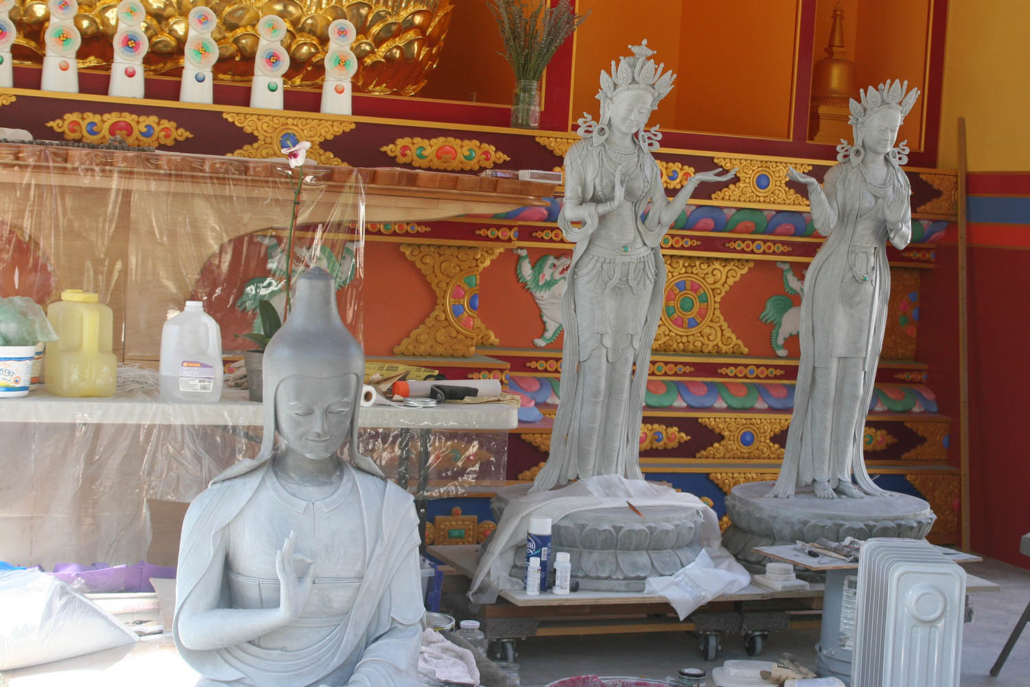
The Mandala Garden is located in the meadow below the temple. Entering its front gate, one walks down a pathway lined with beautifully painted prayer wheels. The garden is home to a 35-foot high statue of Vajrasattva and 20-foot high statues of White Tara and Green Tara placed on either side. Prayer wheels surround three sides of the Vajrasattva statue, allowing visitors to turn them as they circumambulate the statue.
Vajrasattva, known as the Buddha of Primordial Purity, is dedicated to purification of negativity. The Green and White Tara statues represent two aspects of Tara, the female Buddha. Green Tara is associated with the pacification of obstacles and White Tara is associated with longevity. The Mandala Garden also contains a beautiful long life shrine dedicated to the longevity of Venerable Gyatrul Rinpoche. The shrine, sometimes called the Prayer Wheel Building, contains exquisite frescos and a large prayer wheel. An Enlightenment Stupa made of volcanic rock was erected on the northern side of the garden.
The East Wing
The East Wing, a two-story structure adjacent to the temple, provides a warm environment where sangha can gather to share meals, study, converse, and accomplish dharma projects. Its ground floor houses a kitchen, dining hall, restrooms, laundry facilities and areas for making tormas and preparing tsog. In addition, there is a bookstore with a wonderful array of books, CDs, photos, malas, brocade wall hangings and other dharma items. The second floor holds Vimala Publishing’s office, quarters for visiting lamas, and accommodations for visitors.
Amitabha Park
The Amitabha Park is located on a hill to the west of the temple. There the Amitabha Pavilion, an elegant small shrine, contains three beautiful statues as well as sacred texts. A life-sized statue of the red Buddha Amitabha in the center of the shrine is flanked by statues of the bodhisattvas Chenrezig and Vajrapani.
In the Mahayana and Vajrayana traditions, practitioners rely upon Amitabha, the Buddha of Limitless Light, at the time of death. The Amitabha Park was developed as a consecrated place for the ashes of sangha members and their families. A tsa tsa building is included at the site. Tsa tsas, a form of sacred art, are memorials to the dead. These small Buddha images are formed by mixing ashes of the deceased with clay and other substances. Pressing this mixture into molds, the finished image is created. Buddhist families may commission tsa tsas to be made and placed in consecrated areas as a way of honoring loved ones.
Parinirvana Stupa
Gyatrul Rinpoche wished to place a Parinirvana Stupa near the Amitabha Pavilion. The stupa was completed in 2006 by the Nepalese artist Sonam Tsering, with help from sangha members. As Rinpoche noted, “In general, the presence of stupas and statues act to pacify war, famine, disease, natural disasters and the devastating effects of global warming, which is a big concern to many people nowadays.”
Vimalamitra Pavilion
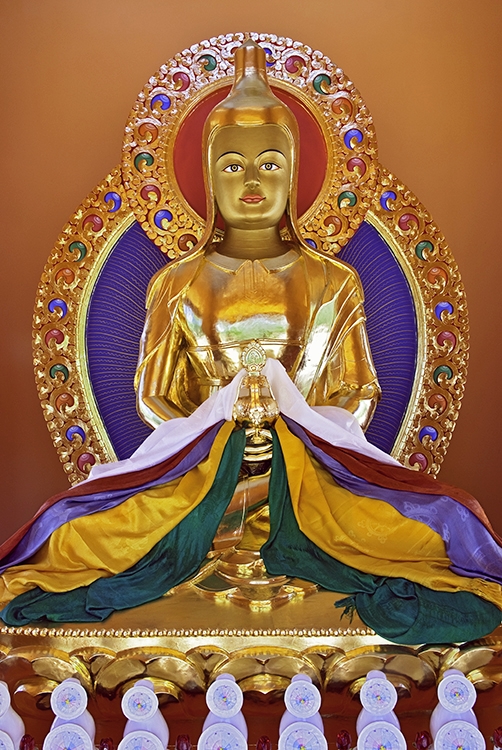
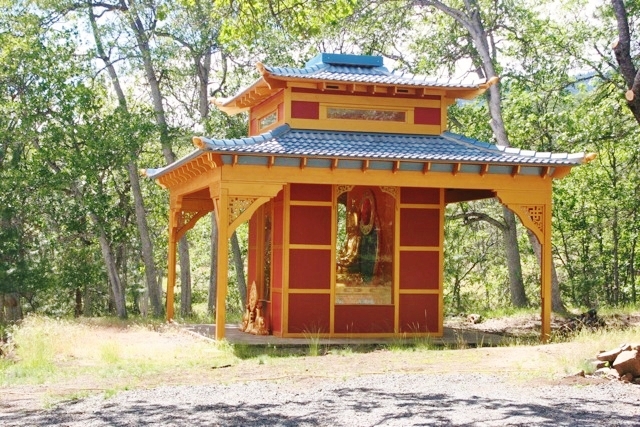
To honor HH Penor Rinpoche, who was an emanation of the renowned 9th century master Vimalamitra, Gyatrul Rinpoche decided to place a Vimalamitra statue in the meadow where Penor Rinpoche bestowed the Nam Cho empowerments in 1985. Artist Sonam Tsering developed the larger than life sized statue and sangha members built an elegant small pavilion to shelter it.
Guru Rinpoche Pavilion
In 2010, thanks to a generous donor, Tashi Choling obtained a 13-foot high statue of Guru Rinpoche. Over the next two years, sangha volunteers worked together to build a splendid small temple to house it, along with a collection of other statues, texts, and thangkas.